
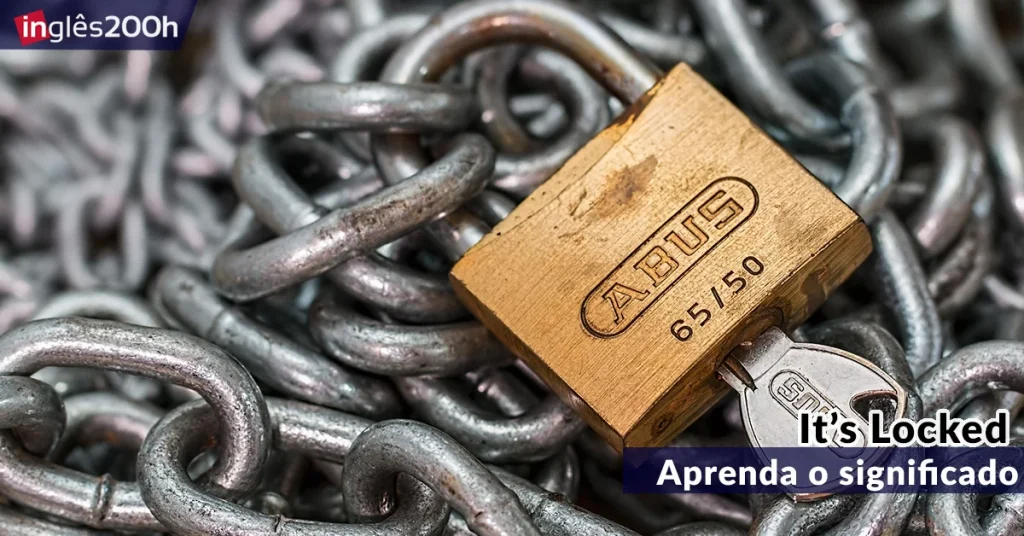
Another common word used in phrasal verbs is the word Locked.
In English, there are three main phrasal verbs that use the word “locked” and they all have similar meanings: locked in, locked out, and locked up. The following will explain what each of these phrases means and how to use them.
Locked
Locked in: This means to be confined into a building with no way to get out. It most commonly refers to being confined to a house where the door is locked and there is no way to escape except unlocking the doors.
The phrase can also refer to locking something into a confined space like keys in a car. Here are some examples of how to use this phrase:
1. I forgot where I put my house keys and so I was locked in all night.
2. I locked my jewelry in the safe so that it wouldn’t get stolen.
Locked out: As you can probably guess, “locked out” is the opposite of “locked in” and is when someone or something has no way to get into a building or other confined space because the door is locked. As is the case with “locked in,” it can also refer to keeping someone or something out of a building by locking the entrance. Here are some examples:
1. I can’t believe that I got locked out of my own house.
2. Because the babysitter accidentally locked the dog out of the house, he crawled under the tree.
It should be noted that in both of these cases, the phrases are many times used to refer to accidentally being unable to enter or exit a building because the door is locked although this is not always the case.
Enquanto você lê
Ler sobre inglês não é falar inglês.
Em 200 horas a gente tira você do “entendo mas não falo”. Descubra em qual módulo você entra.
Estudei 4 anos em outra escola e não falava. Aqui eu falei no terceiro mês.
Locked up: This phrase means almost the same as “locked in” because it means “to be unable to exit a building because the entrance is locked” or “keeping someone or something confined by locking the entrance.” However, in this case there is one key difference because the building usually refers to a jail cell. Therefore, being locked up is almost never accidental. Here is how this phrase is used in a sentence:
1. We do not have to worry because the man that robbed us is locked up.
2. He committed a crime, so the police locked him up.
Here are some more examples of how these phrases are used:
http://jalopnik.com/5195357/woman-calls-911-because-shes-locked-in-her-car
(see the title of this video)
(see the title of this article) This article tells of how numerous car owners have complained that their keys have stopped working and they have been locked out of their cars.
http://www.eji.org/files/11.09.09%20The%20Atlantic%20-%20kids%20locked%20up%20for%20life.pdf
(see the title of this article) This article treats the question of whether or not kids should receive lifelong prison sentences for their crimes.
Deixe um comentário