
Another word commonly used in phrasal verbs is the word “count.”
In the English language there are four main phrasal verbs using “count”: count in, count out, count up, and count down. The following will explain the meaning of each and show how it is used.
Count (someone) out: This phrase means that you are unable to “contar com a participação de alguém”. It can also be used in a context of someone who is considered unlikely to succeed. Here are some examples:
1. I have a doctor’s appointment tomorrow when you are planning to leave for the game, so count me out.
2. He has a lot to learn, but he also has talent, so don’t count him out just yet.
Count (someone) in: As you can probably guess, this phrase means the opposite of “count someone out.” It means able to “contar com a participação de alguém”. Here is an example:
Do you want to go to a Chinese restaurant after class? I love Chinese food! Count me in!

Enquanto você lê
Ler sobre inglês não é falar inglês.
Em 200 horas a gente tira você do “entendo mas não falo”. Descubra em qual módulo você entra.
Estudei 4 anos em outra escola e não falava. Aqui eu falei no terceiro mês.
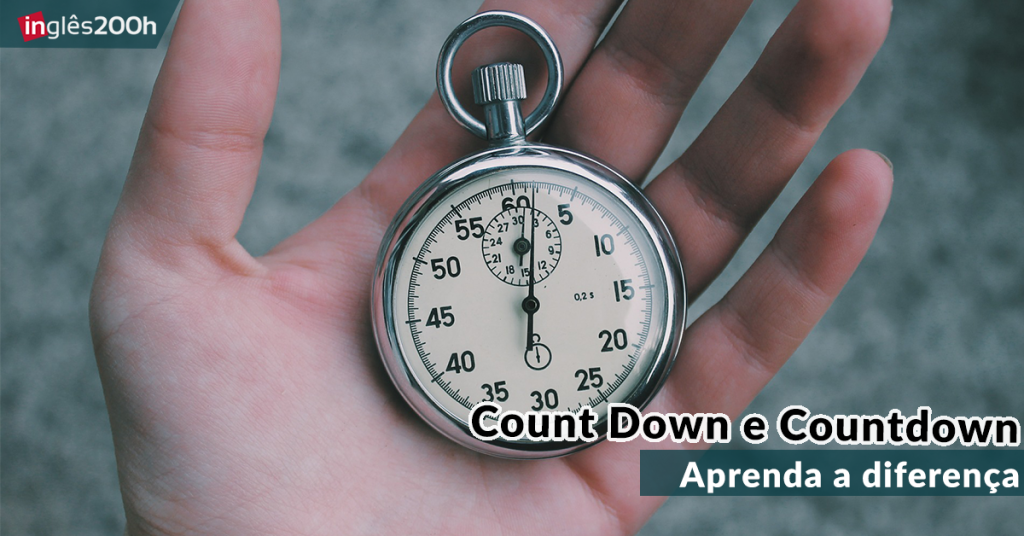
Count down: This phrase means to “fazer contagem regressiva.” It can be easily confused with the word “countdown” which is a noun meaning “contagem regressiva.” However, this is a phrasal verb. Here is an example of how this phrase is used:
Join us as we count down the ten most amazing soccer games of all time.
Count up: This phrase is very similar to the single word “count” but has a slightly different meaning. “Count up” means to count something to arrive at a total. Here is an example:
Count up the money we’ve raised so far, and we’ll see if we have enough to buy a house.
Here are some more examples of how these phrases are used:
http://www.sing365.com/music/lyric.nsf/Count-Me-In-lyrics-Leeland/7815537EEDA5EB10482573BC001638CD
(see chorus)
Deixe um comentário